planning
75 Hard Workout Plan for Women: Build a Safer Two-a-Day Schedule
by Abigail Winslow10 min read
A sustainable 75 Hard workout plan for women should not make both daily sessions hard. Use one structured strength or conditioning session and one lower-intensity outdoor session such as walking. Keep the two sessions separate, progress gradually, and adjust around your training history, health, sleep, menstrual symptoms, pregnancy, postpartum recovery, injury, and professional guidance.
The official 75 Hard rules require two 45-minute workouts each day, with one outdoors. The programme does not prescribe which workouts to choose. That leaves a major decision to you: how to complete the rule without turning 150 sessions into repeated punishment.
Check whether the challenge fits you first
Seventy-five consecutive days without a planned rest day is a demanding structure. Choose a different challenge whenever you need a different structure, and get individual guidance before you make a decision that a public workout template cannot make for you.
The CDC advises adults to build activity gradually and combine aerobic activity with muscle-strengthening work. That public-health target does not require two daily workouts or 75 consecutive days. You can choose a different challenge if the official rules do not fit you.
Use one demanding session and one easy session
Treat “two workouts” as two purposes.
| Session | Purpose | Examples |
|---|---|---|
| Primary session | Strength, skill, or planned conditioning | Full-body strength, coached class, cycling intervals, swimming |
| Outdoor session | Easy movement and daylight | Walk, easy hike, mobility outside, relaxed cycling |
Do not stack high-intensity intervals with heavy lifting every day. The easy session still counts as movement while protecting your ability to return tomorrow.
A seven-day template
Repeat the structure only after you adjust it to your experience.
| Day | Primary 45 minutes | Outdoor 45 minutes |
|---|---|---|
| Monday | Full-body strength A | Easy walk |
| Tuesday | Low-impact cardio | Easy walk or mobility |
| Wednesday | Full-body strength B | Easy walk |
| Thursday | Technique, yoga, or easy cycling | Easy walk |
| Friday | Full-body strength A | Easy walk |
| Saturday | Moderate cardio or coached activity | Relaxed outdoor movement |
| Sunday | Mobility and very light bodyweight work | Easy recovery walk |
The Sunday sessions remain intentionally light because the official programme does not include rest days. If you need rest, take it. Protecting your health matters more than preserving a challenge label.
Build two full-body strength sessions
Choose one movement from each group:
- squat or split-squat pattern;
- hip hinge or bridge pattern;
- push;
- pull;
- carry or trunk exercise.
Start with two or three controlled sets. Leave several repetitions in reserve while you learn the schedule. Add weight or repetitions only when your technique and recovery remain consistent.
You do not need a different workout every day. Repeating the same two sessions makes progress and fatigue easier to judge.
Plan around symptoms without inventing universal cycle rules
Use your own notes instead of assuming that a universal cycle calendar should control your training. Record how each session felt and adjust today’s load or exercise selection when the planned work does not suit you.
If bleeding, pain, dizziness, fatigue, or another symptom worries you, stop and seek appropriate medical advice. A challenge app and a public workout template cannot diagnose the cause.
Use clear stop and adjustment rules
Write these before day one:
- I stop a movement when I feel sharp or unusual pain.
- I replace impact with lower-impact movement when needed.
- I reduce load when technique changes.
- I seek professional guidance when symptoms persist or worry me.
- I end the challenge if the rules conflict with my health.
Missing or changing a session does not erase the work you completed. It tells you that the plan needed a different decision.
Progress across 75 days
Use three phases:
- Days 1–14: learn the schedule. Keep most sessions easy and record recovery.
- Days 15–49: progress one variable. Add a small amount of load, time, or technical difficulty.
- Days 50–75: protect consistency. Maintain useful work and remove unnecessary intensity as fatigue accumulates.
Watch sleep, persistent soreness, motivation, performance, and pain. One difficult day happens. A worsening pattern needs a change.
Track the plan in Her Glow Up
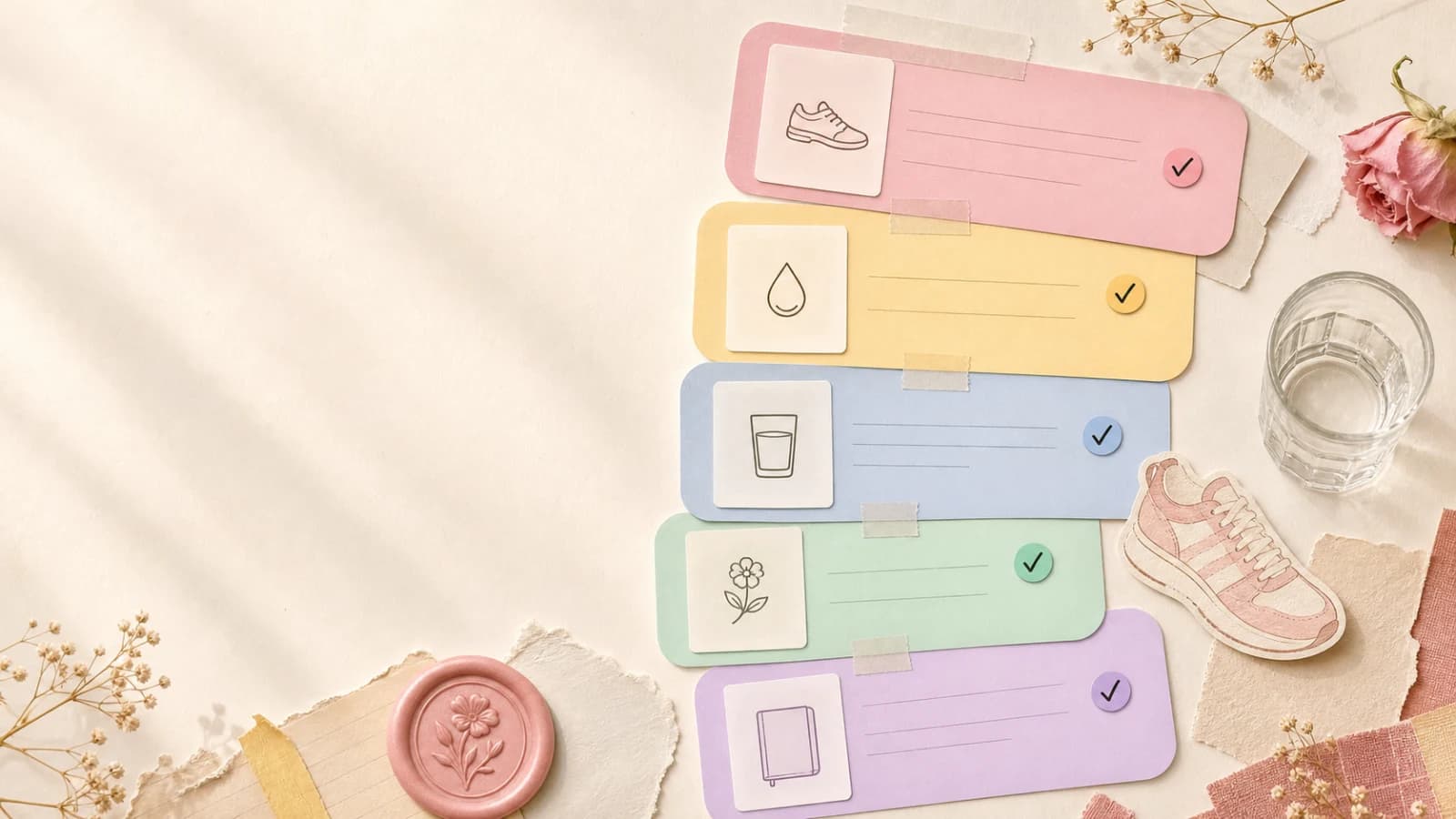
Her Glow Up: 75 Day Challenge lets you plan your own daily tasks and mark each one complete. Her Glow Up lets you attach a progress photo to a day you finished.
Your next action: build separate tasks for the primary workout, outdoor workout, water, reading, and your own recovery note. Then record what you actually did instead of trying to remember 150 sessions at the end.
Frequently asked questions
Do both 75 Hard workouts need to be intense?
No. The official rule sets duration and requires one outdoor workout; it does not require two hard sessions. An easy outdoor walk can make the schedule more manageable.
Can I strength train every day?
You can include strength-related movement without training the same muscles hard every day. Alternate sessions, use lighter technique or mobility days, and adjust to your experience and recovery.
What if I need a rest day?
Take the rest you need. The official challenge restart rule does not outrank your health. You can stop, modify the rules, or choose a different challenge.